

Why People Are Queueing for TeaHaus in Klang
In a dining landscape saturated with cafés and concept-driven restaurants, it takes more than aesthetic plating or trend-led menus to sustain real demand. Yet TeaHaus continues to draw consistent queues — not out of hype alone, but because it delivers a differentiated, experience-led proposition that resonates with today’s diners.
KL Review Malaysia
4/30/20262 min read
Why People Are Queueing for TeaHaus in Klang
In a dining landscape saturated with cafés and concept-driven restaurants, it takes more than aesthetic plating or trend-led menus to sustain real demand. Yet TeaHaus continues to draw consistent queues — not out of hype alone, but because it delivers a differentiated, experience-led proposition that resonates with today’s diners.
A Concept That Goes Beyond “Just a Meal”
At the core of TeaHaus is a clear culinary identity: tea is not treated as a beverage pairing, but as an active ingredient embedded across the menu. From tea-infused sauces and slow-smoked meats to desserts layered with subtle tannin notes, each dish is designed to express depth rather than novelty.
This positioning matters. In a market where most cafés compete on familiarity, TeaHaus offers something intellectually and sensorially engaging — a reason for diners to be curious, not just hungry.
Flavour Architecture That Feels Intentional
What keeps customers returning is not experimentation alone, but execution. The integration of tea is calibrated — present enough to be distinctive, but controlled so it enhances rather than dominates.
Regular patrons often highlight how the flavours unfold: the initial savoury profile, followed by a light aromatic finish that lingers without heaviness. This layered approach creates a dining experience that feels refined yet approachable, appealing to both casual diners and more discerning food enthusiasts.
Experience-Led Dining Drives Shareability
TeaHaus has successfully positioned itself within the “experience economy.” The presentation, ambience, and storytelling around tea culture make it inherently shareable — both socially and digitally.
Diners are not just consuming food; they are participating in a narrative. Tea tastings, workshops, and curated menus elevate the visit into something closer to a lifestyle experience than a standard meal. This naturally drives word-of-mouth and repeat visits.
Consistency Builds Trust — and Queues
Queues are rarely sustained by marketing alone. They are built on operational consistency. TeaHaus maintains a relatively stable standard in flavour, portioning, and presentation, which reinforces customer trust.
When diners are willing to wait, it is typically because past experiences — or strong recommendations — reduce perceived risk. In this case, the queue signals confidence in delivery, not just curiosity.
A Space That Encourages Lingering
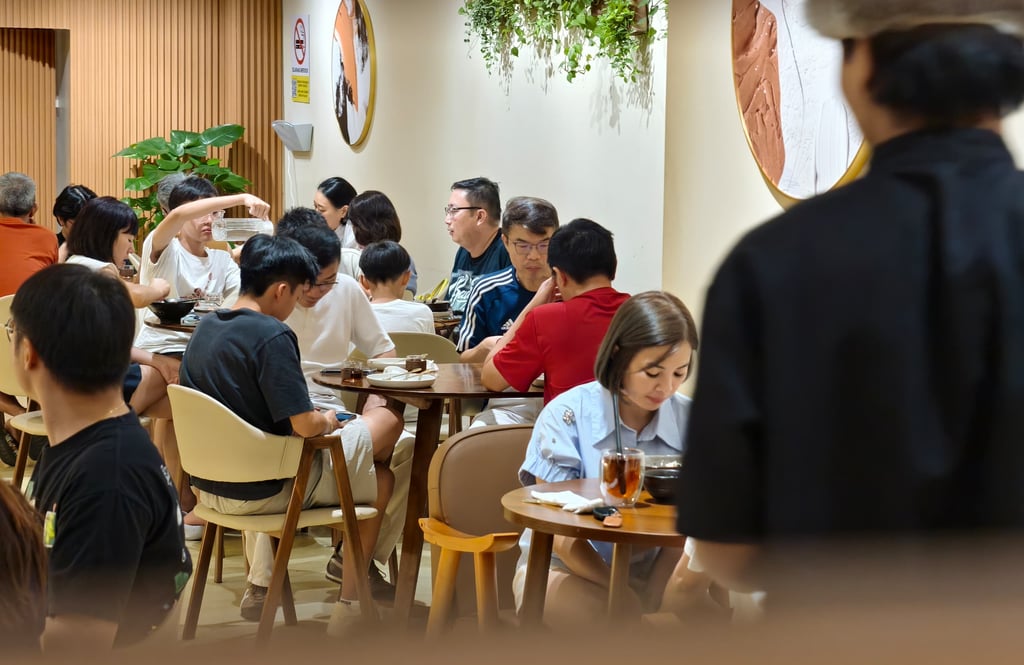
Unlike high-turnover eateries, TeaHaus adopts a more relaxed, community-oriented environment. The space invites diners to slow down, engage, and spend time — whether through conversation, tea appreciation, or simply enjoying the atmosphere.
This slower dining model naturally reduces table turnover, contributing to visible queues, especially during peak periods. However, it also enhances perceived value, as guests feel they are paying for time and experience, not just food.
Strategic Location and Audience Fit
Klang’s evolving café scene has created a demand for concepts that feel elevated yet accessible. TeaHaus sits comfortably within this niche, attracting a mix of young professionals, couples, and experience-driven diners seeking something beyond conventional kopitiam or café offerings.
Its positioning aligns well with a demographic that values uniqueness, quality, and shareable moments — all key drivers of sustained footfall.
Final Take
People are not just queueing for food at TeaHaus — they are queueing for differentiation, consistency, and an experience that feels intentional.
In a competitive market, that combination is rare. And when a concept manages to deliver it reliably, queues are no longer a barrier — they become part of the brand itself.
© 2026. TEAHAUS. ALL RIGHTS RESERVED.