

Dry Prawn Noodle — A Study in Curation and Craft at TeaHaus
Among TeaHaus’ more understated creations, the Dry Prawn Noodle reflects the brand’s core philosophy: thoughtful sourcing, precise execution, and flavour built through layering rather than excess. It is a dish that appears simple at first glance, yet reveals a high level of curation upon closer inspection.
KL Review Malaysia
3/3/20262 min read
My post content
Dry Prawn Noodle — A Study in Curation and Craft at TeaHaus
Among TeaHaus’ more understated creations, the Dry Prawn Noodle reflects the brand’s core philosophy: thoughtful sourcing, precise execution, and flavour built through layering rather than excess. It is a dish that appears simple at first glance, yet reveals a high level of curation upon closer inspection.
Ingredient Curation: Quality as the Foundation
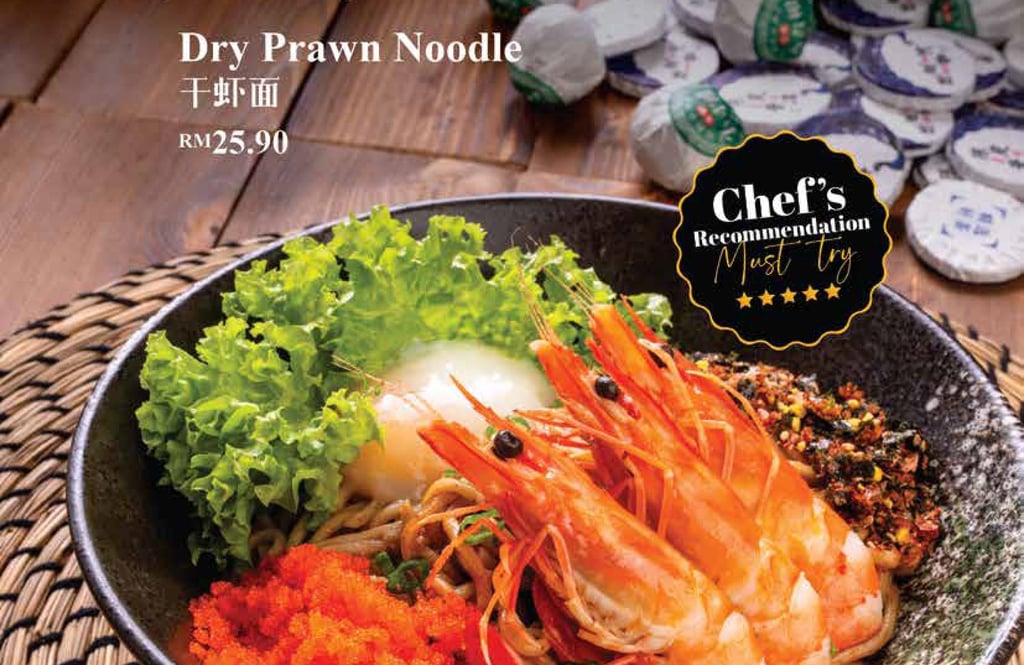
At the centre of the dish are three large prawns, deliberately portioned to anchor both presentation and flavour. Their size is not merely visual — it ensures a firm, succulent texture and a naturally sweet, marine depth that forms the backbone of the dish.
Complementing this is Japanese ebiko (shrimp roe), which introduces a contrasting element:
A subtle brininess that amplifies the prawn’s natural umami
A delicate pop that adds textural complexity
A visual accent that reinforces refinement and attention to detail
Rather than overwhelming the palate, these components are calibrated to work in tandem — each contributing a distinct role within the overall composition.
The Noodle: Structure and Function
Equally critical is the selection of specialty noodles, chosen for their ability to carry sauce while maintaining structural integrity.
In a dry-style preparation, the noodle becomes more than a base — it acts as a medium for flavour retention and delivery. The ideal texture strikes a balance:
Firm enough to hold its bite (al dente)
Smooth enough to absorb and coat evenly with the sauce
Neutral enough to allow the prawn and seasoning to remain the focal point
This technical consideration ensures that every strand contributes consistently to the eating experience.
Sauce Engineering: Controlled Intensity
The defining element of any dry prawn noodle lies in its sauce. At TeaHaus, the approach leans toward precision over heaviness.
The sauce is typically constructed to achieve:
A concentrated umami base, often derived from prawn essence or stock reduction
A balanced savoury profile, avoiding excessive oiliness or saltiness
A clean finish, allowing the natural sweetness of the prawns to remain prominent
This restraint is intentional. Rather than masking the ingredients, the sauce acts as a unifying layer that binds the dish together.
The Story Behind the Dish
This dish reflects a broader narrative within TeaHaus’ culinary direction — the idea of elevating familiar street food through refinement and discipline.
Dry prawn noodles are a staple across Malaysia, typically found in hawker settings where flavour is bold and immediate. TeaHaus retains the essence of this comfort food but reinterprets it through:
Higher-grade ingredient sourcing
More controlled flavour balance
A presentation that aligns with modern dining expectations
The inclusion of elements like Japanese ebiko further signals a cross-cultural influence, integrating subtle Japanese accents into a fundamentally local dish without losing its identity.
Craftsmanship in Execution
What ultimately defines the dish is not any single ingredient, but the consistency of execution:
Prawns cooked to retain juiciness without becoming rubbery
Noodles timed precisely to avoid clumping or over-softening
Sauce evenly distributed to ensure uniform flavour in every bite
This level of control reflects kitchen discipline — a hallmark of concept-driven dining rather than casual preparation.
Final Perspective
The Dry Prawn Noodle at TeaHaus is a clear example of how a familiar dish can be elevated through curation and craftsmanship.
It is not designed to shock with boldness, but to impress through balance, texture, and clarity of flavour. For diners, the appeal lies in this refinement — a dish that respects its origins while presenting a more composed, modern interpretation.
© 2026. TEAHAUS. ALL RIGHTS RESERVED.